
by Daniella Zumbo
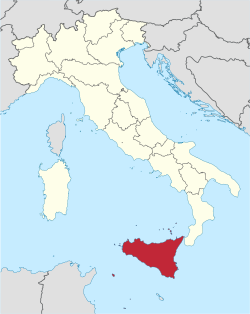
Despite the scenic landscapes of Sicily and famous Sicilian product, such as cannolis and granita, a pervasive issue that hinders the prosperity of Sicilian businesses has been masked – the Mafia. The intersection of organized crime and commerce has become complex, and is a defining aspect in the economic sector of Sicily. Despite this dilemma, there is the compelling aspect of the Addio Pizzo movement, an initiative that stands as a form of resistance against the Mafia on local businesses.
The issue revolves around the influence of the Sicilian Mafia, otherwise known as “Cosa Nostra”. The relationship between businesses and organized crime has not only created an environment with fear, but has also hindered economic growth and innovation in Sicily. The causes of this problem have many deep roots, some of which include historical power dynamics, socioeconomic challenges, and the relationship between criminal organizations and local institutions. The Mafia’s ability to infiltrate businesses, through the use of unethical methods like extortion, has been worsened by complex political and social factors.
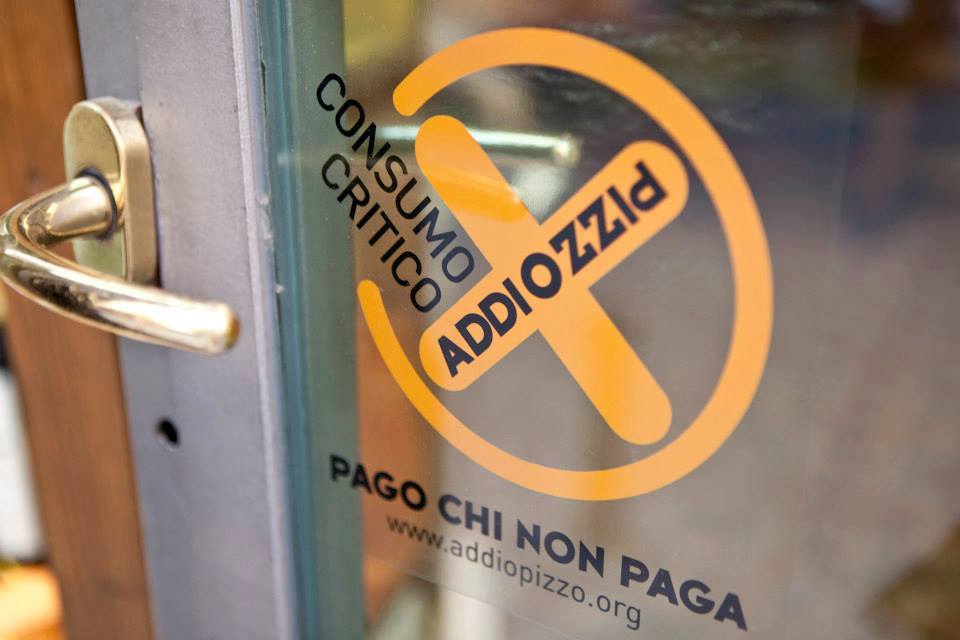
The Addio Pizzo movement emerged as a powerful weapon Sicilians could use to combat the Mafia. Composed of business owners and citizens, the movement takes a stand against paying the Mafia the “pizzo”, or protection money. The purpose of this movement is to manifest resilience and redefine the narrative of business in Sicily, without the fear of the Mafia. Different perspectives help to shape this narrative. For business owners, the Addio Pizzo holds purpose of committing to ethical business practices, and a hope for a Mafia free economic future. For the Mafia, the movement can be seen as a threat to their power, challenging their control over the economy and the influence they have on businesses.
Understanding Mafia Infiltration: Destructive Entrepreneurship in Sicilian Businesses
The idea of destructive entrepreneurship between the Mafia and legitimate businesses in Sicily is set forth by Clotilde Champeyrache in her article. The idea of Mafia entrepreneurship highlights the essence of criminal organizations operation not only in illegal activities but also in the legal sphere.
The infiltration of legitimate business by the Mafia serves several purposes, most of which are rooted in economic functions. A key motive behind infiltrating is that it allows the Mafia to cloak its criminal activities behind this cape of legality. Legitimate enterprises provide cover for illicit operations, such as loan-sharking or illegal betting. The Mafia’s presence in legal business allows the to integrate inputs and outputs they need for both legal and illegal activities, facilitating activities like money laundering.
The idea of Mafia entrepreneurship emphasizes the Mafia’s participation in legal activities – this has caused an increase in Mafia owned legal enterprises. Champeyrache highlights that the unique aspect of this type of entrepreneurship is the use of violence in these otherwise legal markets. This can be seen as a long term infiltration, one historically observed during significant economic transitions in Sicily. Despite involving mediation and appropriation, the Mafia’s part in legal markets is seen as unproductive. The Mafia acts as a mediator, they provide trust when people are experiencing mistrust, and they enable transactions that wouldn’t otherwise occur without their involvement.
The Mafia creates this artificial need for protection, which then generates fear and encourages entrepreneurs to invest in additional expenses for security. This contributes to why entrepreneurs feel as if they need to pay this “pizzo”, and protect themselves from the Mafia. This payment represents the economic and social loss that is associated with these entrepreneurs and the Mafia.
The Mafia entrepreneurship has led to the castration of entrepreneurial potentials as businesses will avoid expanding to avoid attention from the Mafia. This creates a cycle that stifles economic growth under the influence of the Mafia.
Models of Social Change in Sicily: The Addio Pizzo Movement
The Addio Pizzo Movement has emerged as an alarm for civic resistance to the Mafia. This movement represents a dynamic in which citizens take initiative along with law enforcement strategies aimed at dismantling the control that the Mafia has over entrepreneurs and the economy.
Elsenbroich explores the effects of introducing this resistance styled movement into society. The Addio Pizzo Movement is special because of the way it introduces the concept of a resistance that is socially transmitted. Entrepreneurs who take part in this movement consider punishments of neighboring entrepreneurs and also factor in the way that neighboring entrepreneurs exhibit resistance to the Mafia’s demands. This emphasizes the importance of these Sicilian entrepreneurs collective reasoning in shaping resistance levels from the Mafia within the Sicilian population.

The Addio Pizzo movement is a socially transmitted resistance – this means that it operates in a way where entrepreneurs base their reasoning and decisions on punishment probability according to the number of entrepreneurs and businesses resisting the Mafia in their neighborhood. Through this reasoning, the “pizzo” is enhanced as it is weighed against the punishment through considering the resistance of the entire group of entrepreneurs/businesses. This results of this demonstrate that this reasoning brings a significant changes to Mafia resistance levels in Sicily.
Elsenbroich acknowledges that there are limitations. The use of the Addio Pizzo as a method of resistance, the interdependencies and the dynamics Sicilian entrepreneurs and Sicilian citizens must be discovered. This movement stands as a testament to the potential of collective action in disruption the structure that is in place due to the Mafia’s extortion networks.
Unraveling Social Norm Change through Collective Action
As previously outlined, the Addio Pizzo movement is a compelling one which can illustrate how social norms can be transformed through this type of process. Social norms – defined as shared behavioral rules guided by expectations – constitute the ‘grammar’ of society (Bicchieri, 2006). The norm was paying the “pizzo”, this was sustained by beliefs and social expectations. The Addio Pizzo movement took a strategic approach that aligned with Bicchieri’s norm change path.
Lipari outlines the process of how collective action changes the social norms of Sicily. Awareness involves breaking silence around the “pizzo” payment. A flyer attack was used to highlight the negative effects and helped invite the community in discussions to talk about the inconsistency between their beliefs and behaviors. Deliberation was mainly taken place through social entrepreneurs who fostered open discussion about the need for change. Individual coherence started with consumers adopting this change and businesses displaying an Addio Pizzo label.
:max_bytes(150000):strip_icc()/addiopizzo-5708ae3e7db349318cd4b55c16fe6e39.jpg)
The movement was tactical in creating protected networks between consumers and businesses. This helped to weaken and break pre-existing expectations in terms of the “pizzo”. As new consumers joined and the movement grew, there were new expectations born. Addio Pizzo was successful in collaborating with anti-Mafia entities, educational institutions, and consumer organizations. This reinforced the legitimacy of the new norm they created.
Conclusion
The Sicilian Mafia’s destructive form of entrepreneurship has stifled economic growth and innovation in Sicily, creating an environment of fear. The Addio Pizzo movement has grown as a powerful form of civic resistance. The purpose of the movement is to challenge the norm of paying the “pizzo” and helping to reshape the Sicilian economy. The movement is an alarm for societal change, introducing this socially transmitted resistance that is reliant on collective reasoning between entrepreneurs.
The significance of the issue is in the blending of organized crime and legitimate business – the Mafia’s infiltration has hindered entrepreneurial potential and the expansion of the Sicilian economy. The Addio Pizzo movement has worked to disrupt this cycle. It highlights the interdependencies among Sicilian entrepreneurs and citizens, emphasizing that together they can fight against the Mafia and gain control of the economy.
Looking ahead, the movement highlights the importance of Sicily’s efforts to change social norms through awareness, deliberation, and collective action. The collaboration between things like anti-Mafia entities, educational institutions, and consumer organization helps set a precedent for future initiates. The Addio Pizzo movement stands as proof to the resilience of Sicilian citizens in reshaping the economy and their hope for a Mafia-free future.
References
Bicchieri, C. (2006), The Grammar of Society: The Nature and Dynamics of Social Norms, Cambridge: Cambridge University Press.
Champeyrache, Clotilde. “Destructive entrepreneurship: The cost of the mafia for the legal economy.” Journal of Economic Issues 52.1 (2018): 157-172.
Elsenbroich, Corinna. “The Addio Pizzo movement: exploring social change using agent-based modeling.” Trends in organized crime 20 (2017): 120-138.
Greer, K.D. and L. (no date) By banding together, Sicilians keep the Mafia away, News Decoder. Available at: https://news-decoder.com/by-refusing-to-pay-sicilians-keep-the-mafia-away/ (Accessed: 13 December 2023).
Lipari F, Andrighetto G. The change in social norms in the Mafia’s territories: the anti-racket movement of Addiopizzo. Journal of Institutional Economics. 2021;17(2):227-242. doi:10.1017/S1744137420000399
Santos, N. dos (2017) Sicilians take a stand against the Mafia by saying no to ‘pizzo’, CNN. Available at: https://www.cnn.com/2017/08/04/europe/sicilians-mafia-pizzo/index.html (Accessed: 13 December 2023).

 Italian Culture