
By: Alessandro Memoli
As we explore some of the culinary traditions of Italian Americans, we delve into a narrative that extends from the late 19th century to the present, tracing the footsteps of over five million immigrants (Serra) who sought solace and opportunity on American soil. Originating in the struggles of Southern Italian peasants seeking a better life, the exploration of Italian-American culture reveals the transformative power of migration, the formation of tightly-knit enclaves, and the enduring significance of traditions such as the festa. From the assimilation challenges faced during World War II to the stereotypical associations with a passion for food, this essay unravels the intricate ties between Italian-American identity and the culinary realm. Ultimately, this culinary exploration serves as a lens through which we witness the dynamic interplay of cultural preservation, adaptation, and the continuous redefinition of ethnic identity within the Italian-American community.
Exploring this topic is important for several reasons. Food serves as a powerful cultural marker, as it reflects the history, values, and identity of a community. In the case of Italian Americans, their culinary traditions are deeply intertwined with their immigrant experience, highlighting resilience, adaptation, and the preservation of heritage. Understanding the significance of dishes and rituals within Italian-American families fosters a sense of community and shared history. This exploration not only promotes cultural appreciation but also helps bridge generational gaps by understanding the traditions that contribute to the rich tapestry of American diversity. Delving into Italian-American culture through the lens of food unveils a flavorful narrative of cultural preservation, adaptation, and the enduring importance of culinary heritage in shaping community identity. Moreover, I find this an interesting topic to research because I have been an Italian immigrant in the US since 2008 when I moved here with my family from Milan. Although I am an American citizen, I classify myself primarily as an Italian who always does his best to keep up with Italian traditions in the USA.
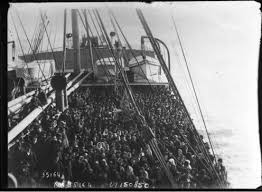
With this said, there is no better place to start than with the first instance of Italian migration to the United States, which took place in the late 1800s, as over two million Italians reached American soil by the turn of the century, around 2.6 percent of the population at the time (Library of Congress). By the late 19th century, the Italian peninsula had finally been unified and was no longer ruled by individual nation-states within its confines, yet by no means did the people share the same culture or experiences. Countless years of trauma, violence, struggle, poverty, and social chaos had created a culture of internal strife. This left poor, southern peasants with little to hope for in Italy, and as transatlantic transportation became more readily available, the idea of going to America became a common dream and the only chance at a better life (Library of Congress).
These immigrants had to pass physical and mental inspections of fitness, and if failed, they would be deemed as unable to work in America and sent back to Italy. Many failed, but those who passed the checks on Ellis Island would go about transforming the new city that they had arrived in, New York. Whereas other nations’ migrants considered The Big Apple as a transit city, Italian migrants chose to remain there. Spreading throughout Brooklyn, the Bronx, the surrounding towns in New Jersey, and mainly Manhattan, they immediately had an impact on the community. In some way, shape, or form, the Italian language could be heard throughout the streets in these communities, as street vendors, store owners, residents, and drifters made up a large portion of the community.

Due to the historical and social divisions inherent in Italy, southern Italian villages were often characterized by isolation. Consequently, new immigrants, who often sought out familiarity in their adopted homeland, tended to perpetuate this isolation by forming closely-knit groups. What would occasionally happen is that the inhabitants of a single village would find themselves on the same block in New York or even within the same building. This culture resolutely preserved their social institutions, worship practices, grudges, and hierarchies from their homeland. This phenomenon mirrors the spirit of ‘campanilismo’ in Italy, which is a loyalty to those living within earshot of the village church bells (Library of Congress). Additionally, a tradition that would often captivate the attention of American citizens was the festa – a parade celebrating the patron saint of the town or city the immigrants came from – in a procession through the neighborhood. So, it can be said that at the very beginning, Italian-American culture was very much just a product of Italian culture brought to America, as language and big gatherings became normal over the years. Additionally, ethnic food culture played a pivotal role during the 1920s and 30s for Italian Americans settling down in this region. As they had just left their homes, food signified a sense of community and family in America (Sciorra 29).

In the face of economic challenges, the idea emerged that even in times of poverty, the family could always provide sustenance and care. The act of sharing food became a symbol of trustworthiness, establishing a connection between people. Enjoying familiar food and companionship was portrayed as a tangible reward for the working-class life these individuals led (Sciorra 21). Additionally, food and food rituals became significant tools for ideological indoctrination and the construction of the “Italian family.” (Sciorra 19) Immigrant parents utilized the convivial consumption of food as a productive force to instill values such as continuity, dedication to hard work, and responsibility for the common good. This is because the family’s beliefs were so focused on purely function and survival, in order to prepare their children for the struggles of the proletarian life they would be destined for. The rituals also served to delay the embrace of middle-class values by reinforcing group solidarity. Sunday dinners and other formal meals played a pivotal role in internalizing family ethics and symbolizing inclusion in the group.

As the century reached its climax with World War II, roughly one million Italian-Americans served in the armed forces (about 5% of the Italian-American population) and countless others worked in war-related jobs. Due to the national service, this population had much increased social mobility, with greater access to education, and a better image in the eyes of the nation. From then on, and especially due to the dramatic rise of mass media, Italian Americans became synonymous with daily life, especially in New York City. The culture became ingrained in the city, as every aspect of “show business, politics, science, and art” (Library of Congress) was often headed by an Italian-American.
As we all know Italians and Italian-Americans alike all love and cherish their cuisine, especially as it played a pivotal role in shaping Italian-American identity. Common dishes include pizza and pasta which have become staples across the nation (Cinotto 38). This has led to the representation of Italian Americans in the United States as often stereotyped by a passion for food. As early as the 1890s, back when migration to the US from Italy first started taking place, Italian immigrants were labeled with code words such as “maccheroni” and “brigante.” (Luconi 205) While culinary clichés are less controversial, they have played a significant role in shaping the identity of Italian Americans. Food is considered a stereotypical yet truthful component of the Italian-American image. It reflects their sense of self, social status, and economic standing. Studies in various disciplines have emphasized the centrality of food to the Italian-American experience, highlighting its role in expressing identity and negotiating one’s place in both the immigrant community and broader U.S. society (Luconi 206).

When Italian migrants first started arriving in the United States, many of them would not return to their hometowns for years – or ever – so, food acted as a medium of remembrance. And now, for Italian Americans, it links them to their native land and reveals their identity. In a more contemporary context, shared meals – especially Sunday dinners – strengthen family and community bonds and evoke memories of the homeland (Luconi 212). Italian Americans’ ethnic identity often revolves around their association with Italian food, reflecting regional variations and pride.
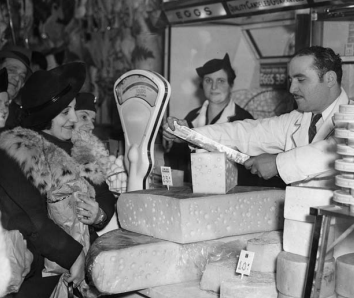
As Italian-Americans settled in the United States over the decades, their culinary landscape underwent a fascinating evolution. The traditional dishes brought from Italy not only survived but also adapted to new environments, incorporating local ingredients and flavors. The geographical spread of Italian immigrants across the country led to the emergence of regional variations in Italian-American cuisine. Additionally, the evolving food industry, exposure to diverse culinary traditions in America, and the advent of globalization have influenced the way Italian-Americans approach their traditional dishes (Dickie 311). Exploring the evolution of Italian-American cuisine provides a nuanced understanding of how food serves as a dynamic marker of identity, continuously shaped by the interplay of heritage and contemporary influences.
However, much like in Italy recipes and preparation methods for different dishes can vary vastly from region to region, city to city, or even house to house, generational conflicts over food often arise in the United States as well. Younger generations tend to have an increased resistance to traditional Italian cuisines as a means of assimilation into the country and to prevent discrimination. This is similar to what happened in the 1930s, as well. Immigrants would often use memories associated with food as a tool to (re)socialize their American-born children (Sciorra 23). On the other hand, newcomers to the US – people who have just arrived – tend to resist the American traditions of eating, such as the American holiday of Thanksgiving (Luconi 210). Another clear divisive line is overeating becoming a commonplace behavior, which reflects the Italian-American custom of feeding guests and overfeeding themselves. The denial of Italianness during the assimilation process is eventually followed by a reclamation of Italian identity, often symbolized through a return to traditional cuisine.

In conclusion, the exploration of Italian-American culture through the tradition of food unfolds a captivating narrative from the late 19th century to the present, showcasing the profound impact of migration, the formation of close-knit enclaves, and the enduring significance of cultural traditions. This culinary journey, intimately linked to the immigrant experience, signifies resilience, adaptation, and the preservation of heritage within the Italian-American community. Beyond being a cultural marker, food serves as a tangible bridge, fostering connections, and bridging generational gaps. The roots of Italian migration, marked by struggles and dreams of a better life, led to the formation of enclaves that mirrored the ‘campanilismo’ spirit, showcasing the transplantation of Italian culture on American soil. Amid economic challenges, food emerged as a symbol of trustworthiness, becoming a tool for ideological indoctrination and constructing the “Italian family.” World War II transformed the socio-economic landscape for Italian-Americans, solidifying their presence in various fields and reinforcing stereotypical associations, particularly with a passion for food. However, generational conflicts over food persist, reflecting a cyclical pattern of identity negotiation. In essence, the enduring love for Italian cuisine, intertwined with Sunday dinners and formal meals, reinforces the Italian-American identity, serving as a powerful narrative thread that weaves through the tapestry of cultural preservation, adaptation, and the continuous redefinition of ethnic identity within the Italian-American experience.
Works Cited:
Cinotto, Simone. The Italian American Table: Food, Family, and Community in New York City. Urbana, Chicago, And Springfield Illinois: University Of Illinois Press, 2013.
Dickie, John. Delizia! FreePress, 2007.
Library of Congress. “A Century in the Spotlight | Italian | Immigration and Relocation in U.S. History | Classroom Materials at the Library of Congress | Library of Congress.” Library of Congress, Washington, D.C. 20540 USA, n.d. https://www.loc.gov/classroom-materials/immigration/italian/a-century-in-in-the-spotlight/.
———. “A City of Villages | Italian | Immigration and Relocation in U.S. History | Classroom Materials at the Library of Congress | Library of Congress.” Library of Congress, Washington, D.C. 20540 USA, n.d. https://www.loc.gov/classroom-materials/immigration/italian/a-city-of-villages/.
———. “The Great Arrival | Italian | Immigration and Relocation in U.S. History | Classroom Materials at the Library of Congress | Library of Congress.” Library of Congress, Washington, D.C. 20540 USA, n.d. https://www.loc.gov/classroom-materials/immigration/italian/the-great-arrival/.
Luconi, Stefano. “Gastronomic Practices and the Reshaping of Ethnic Identity in Italian-American Writing.” Italian Canadiana 31 (August 16, 2022): 63–80. https://doi.org/10.33137/ic.v31i.39177.
Serra, Ilaria. The Imagined Immigrant: Images of Italian Emigration to the United States Between 1890 and 1924 (2009)
Sciorra, Joseph. Italian Folk: Vernacular Culture in Italian-American Lives. Edited by Nancy C. Carnevale and Laura E. Ruberto. JSTOR. Fordham University Press, 2011. https://www.jstor.org/stable/pdf/j.ctt13x06tw.5.pdf?refreqid=fastly-default%3Aec13d27f1ca8d03552e8123019833876&ab_segments=0%2Fbasic_search_gsv2%2Fcontrol&origin=&initiator=&acceptTC=1.

 Italian Culture